On the Global Trade Chessboard, the Asian Market Is Undoubtedly a Dynamic and Opportunity-Rich Land.Yet, many foreign trade professionals enter with great enthusiasm only to hit snags in communication—finding clients “elusive”, cooperation progress sluggish, and partnerships fizzling out eventually. The vast majority of these issues stem not from subpar products or uncompetitive pricing, but from ignorance of cultural differences and business taboos.
Harvard Business Review notes that cross-cultural communication failures lead to a customer churn rate of up to 25%, while teams equipped with effective strategies can boost customer satisfaction by 38%. Asia is by no means a homogeneous market. From the meticulousness of East Asia to the flexibility of Southeast Asia, each country boasts a unique business culture. This article delves into the typical traits and core taboos of clients in key Asian markets, helping you steer clear of pitfalls and secure orders smoothly.
Country-Specific Guide: Your Client “Taboo Checklist”
1. Japan: Details First, Etiquette as the Compass
- Core Traits: Extreme emphasis on etiquette, procedures and details, with a pursuit of perfection. Business decisions are collective actions—slow in the making but executed with remarkable efficiency once finalized.
- Key Taboos & Strategies:
- Avoid Direct Refusal: In Japanese culture, the word “no” is rarely uttered directly. Phrases like “This is a bit difficult” (muzukashii) or “Please allow us to study it” (kento sasete kudasai) often imply rejection. You need to listen carefully to the unspoken messages; pushing for an explicit reply or rushing the process will put them in an awkward position.
- Don’t Neglect Hierarchy & Etiquette: Always exchange business cards with both hands and take a moment to read them as a sign of respect. Use honorific language in communication and address others by their correct titles and positions. Punctuality for meetings is a basic requirement.
- Action Strategies: Exercise maximum patience and provide extremely detailed product information, quality inspection reports and contract terms. Build trust through consistent, reliable and professional performance—this works far better than any flashy sales tactics.
2. South Korea: Relationships First, Swift Execution
- Core Traits: A direct and assertive negotiation style, with a focus on building relationships through interactions. Decision-making is faster than in Japan, yet trust in partners remains a top priority.
- Key Taboos & Strategies:
- Don’t Undermine Initial Rapport-Building: Korean businesspeople are adept at and value setting the mood at the start of negotiations, often spending time discussing topics seemingly unrelated to business. Showing impatience or focusing solely on business matters will be seen as rude and overly eager.
- Avoid Public Rebukes or Embarrassment: A strong “face-saving” culture prevails. Even during heated debates, maintain superficial etiquette and refrain from embarrassing anyone (especially those in senior positions) in public.
- Action Strategies: Prepare thoroughly for price and term negotiations to handle intense haggling. Demonstrate perseverance and respect during discussions—once trust is established, the partnership tends to be stable. Dining tables (especially drinking sessions) are ideal venues for fostering personal connections.
3. India: Price-Sensitive, Long-Term Negotiations
- Core Traits: Highly price-sensitive; skilled at and enjoy the negotiation process. The decision-making chain can be lengthy, but once they recognize your value, they expect long-term cooperation.
- Key Taboos & Strategies:
- Don’t Offer the Rock-Bottom Price First: They assume all prices have significant room for negotiation and will push for multiple rounds of discounts. Revealing your lowest price too early will make them think there’s still wiggle room or that you lack sincerity.
- Avoid Vagueness & Empty Promises: Despite tough negotiations, they appreciate clear and honest communication. Ambiguous commitments will lead to numerous disputes in subsequent cooperation.
- Action Strategies: Leave reasonable negotiation leeway in your initial quote. Maintain patience and a sense of humor, treating negotiations as a “mental game”. Emphasize product cost-effectiveness and long-term cooperation stability rather than one-off transactions.
4. Three Southeast Asian Countries: Relationships, Religion & “Face”
- Vietnam:
- Traits & Taboos: Business decisions may be slow; great emphasis is placed on personal friendships and relationship-building with decision-makers. Pressuring or rushing them often backfires.
- Strategy: Invest time in offline visits and emotional connections to foster a “we’re on the same side” rapport.
- Thailand:
- Traits & Taboos: A Buddhist country with generally gentle and friendly people. Local religious customs and the royal family must be respected.
- Strategy: Maintain a humble and smiling demeanor, avoiding conflicts and public accusations. Thais are open to new products—win them over with quality experiences.
- Indonesia:
- Traits & Taboos: The world’s largest Muslim-majority country, where religious taboos are of paramount importance. Avoid sensitive topics such as local politics and religious comparisons. It is also a highly “face-conscious” society.
- Strategy: Never argue publicly with or blame clients. Building trust takes time, but once you become friends, cooperation will be highly reliable.

Common Mindsets & Communication Tips for Asian Clients
Despite significant national differences, some core East Asian cultural values are shared:
- Relationships > Contracts: In many parts of Asia, trust-based personal relationships are often the cornerstone of business, sometimes outweighing written contracts. Legal recourse is considered a last resort.
- Indirectness > Directness: To maintain harmony and “face”, communication is usually roundabout. Silence and polite refusals are common, while direct rejection is rare. You need to learn to “listen to the silence”.
- Face > Reason: In any situation, preserving the dignity and face of both parties is the top priority. Publicly correcting others or engaging in heated arguments is the fastest way to ruin a partnership.
- Patience > Efficiency: Decision-making may involve multi-party consultations, taking longer than in Western countries. Demonstrating patience is a sign of respect and professionalism.
From “Knowing” to “Doing”: Your Cross-Cultural Communication Toolkit
Understanding taboos is just the first step—how to put this into practice in daily communication? Here are key recommendations:
- Do Your Homework Before Communication: Research the background and decision-making hierarchy of your target client’s company, as well as the cultural preferences of your contact person.
- Adjust Your Communication Style: For Japanese and Korean clients, use extremely formal and detailed language in emails and conversations; for Southeast Asian clients, start with appropriate small talk to build a friendly atmosphere.
- Leverage Modern Tools to Manage Relationships: Use a CRM system to record clients’ religious beliefs, important festivals, communication preferences (e.g., phone calls vs. emails) and family situations. Sending greetings to Indonesian clients before Eid al-Fitr or preparing gifts for Vietnamese clients ahead of Lunar New Year—these small details have an unexpectedly powerful impact.

Efficient Outreach & Professional Relationship Maintenance: Why You Need a Tool Like IntBell
When dealing with Asian clients, in addition to understanding cultural taboos, choosing an efficient and professional communication tool is equally crucial. It allows you to advance business reliably while respecting clients’ habits.
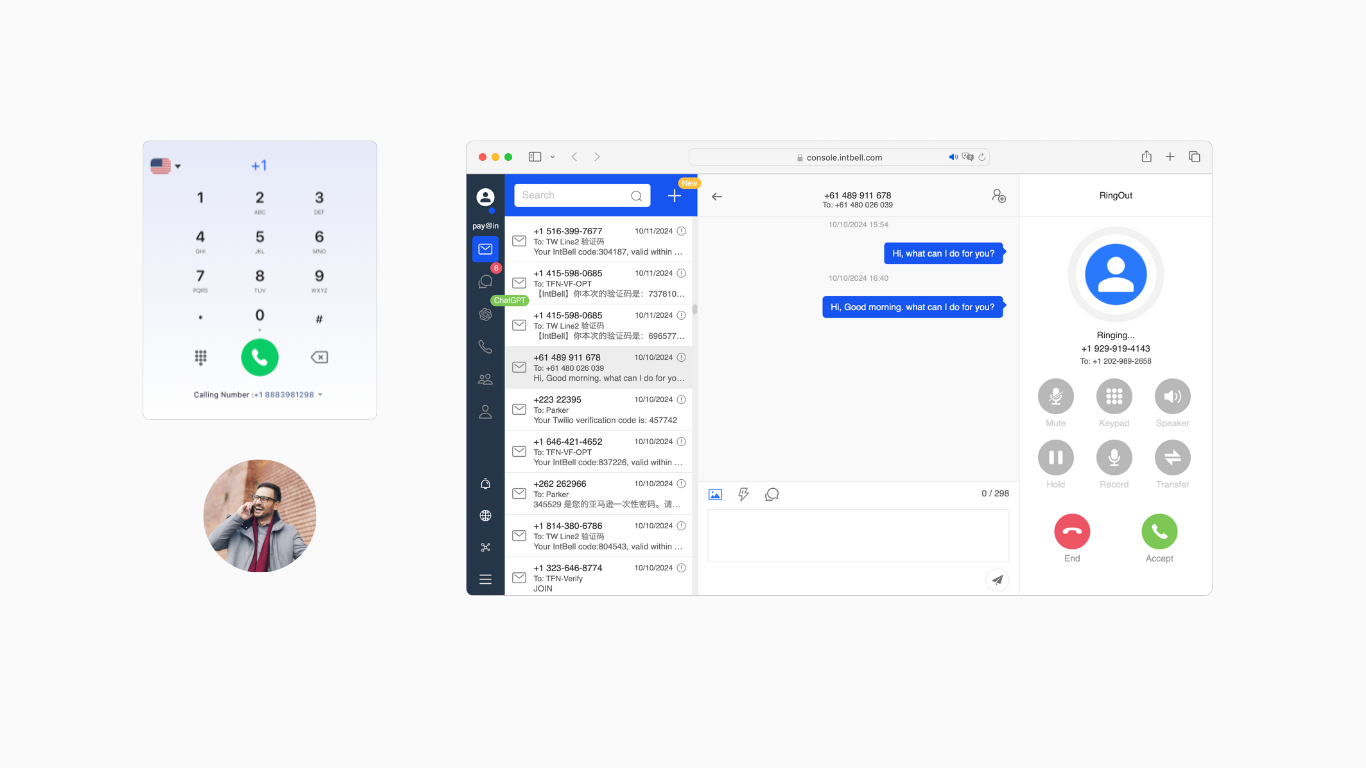
In this regard, IntBell International Cloud Communication Service is a practical tool worth considering. It directly supports your daily communication with Asian clients in the following ways:
- Build Local Trust: Apply for local virtual numbers in major trading regions (e.g., the US, Japan, Hong Kong China) via IntBell to contact clients. When customers see a familiar local caller ID, their willingness to answer and reply increases significantly, helping to quickly break the ice in initial communication.
- Ensure Clear Critical Calls: Its high-definition, stable call lines guarantee clear, delay-free voice communication when discussing complex order details or conducting important negotiations, avoiding misunderstandings caused by poor call quality.
- Adapt to Diverse Communication Habits: In addition to calls, its two-way SMS function is ideal for sending order updates, holiday greetings or simple reminders. This method is more timely than emails and less intrusive than phone calls, aligning with the preference of many Asian clients for asynchronous text communication.
- Achieve Cost Control: Its transparent pricing model saves considerable communication costs compared to traditional international long-distance calls, enabling you to contact clients proactively and frequently with flexibility, focusing on relationship maintenance without worrying about phone bills.
In Summary: Successful cooperation with Asian clients is built on the dual foundations of “cultural understanding” and “professional communication”. Combining the “tacit knowledge” of cultural taboos with efficient and reliable “tools” is a wise choice for establishing long-term trust and steadily expanding your business in the Asian market.
Note: Cross-cultural communication is profound and extensive. The content in this article represents common scenarios and recommendations. In practice, you should adjust flexibly based on specific clients and always maintain a mindset of learning and respect.