Guide to Foreign Trade Jargon (Logistics & Documentation Edition): What “Epic Voyage” Is Your Cargo Undergoing?
Once an order’s price is finalized and payment terms agreed upon, the foreign trade battlefield shifts from the conference room to the vast global supply chain. The journey of goods from the production line to the customer’s warehouse is fraught with uncertainties and professional terminology. Only by understanding the jargon of logistics and documentation can you act like a seasoned captain, steering through storms and waves, instead of just praying your cargo stays safe.
I. Logistics Turbulence: Heart-Stopping Moments
“Container Roll-Over”
- Scenario: Everything is ready, when you suddenly get a message from your freight forwarder: “Sorry, this vessel is overbooked—your container has been rolled over.”
- Actual Meaning & Response: It doesn’t mean the container is physically thrown away. Rather, due to the shipping line’s overbooking, your container fails to be loaded onto the scheduled vessel and is “rolled over” to the next sailing. This results in a shipping delay of at least one week. You must immediately notify the customer, update the ETA (Estimated Time of Arrival), and check if it will affect the L/C (Letter of Credit) presentation period. This is a test of your relationship with the freight forwarder and your emergency response capabilities.
“Port Congestion & Warehouse Overload”
- Scenario: Your freight forwarder says: “Mombasa Port is overloaded again—the dwell time for imported containers has reached 10 days.”
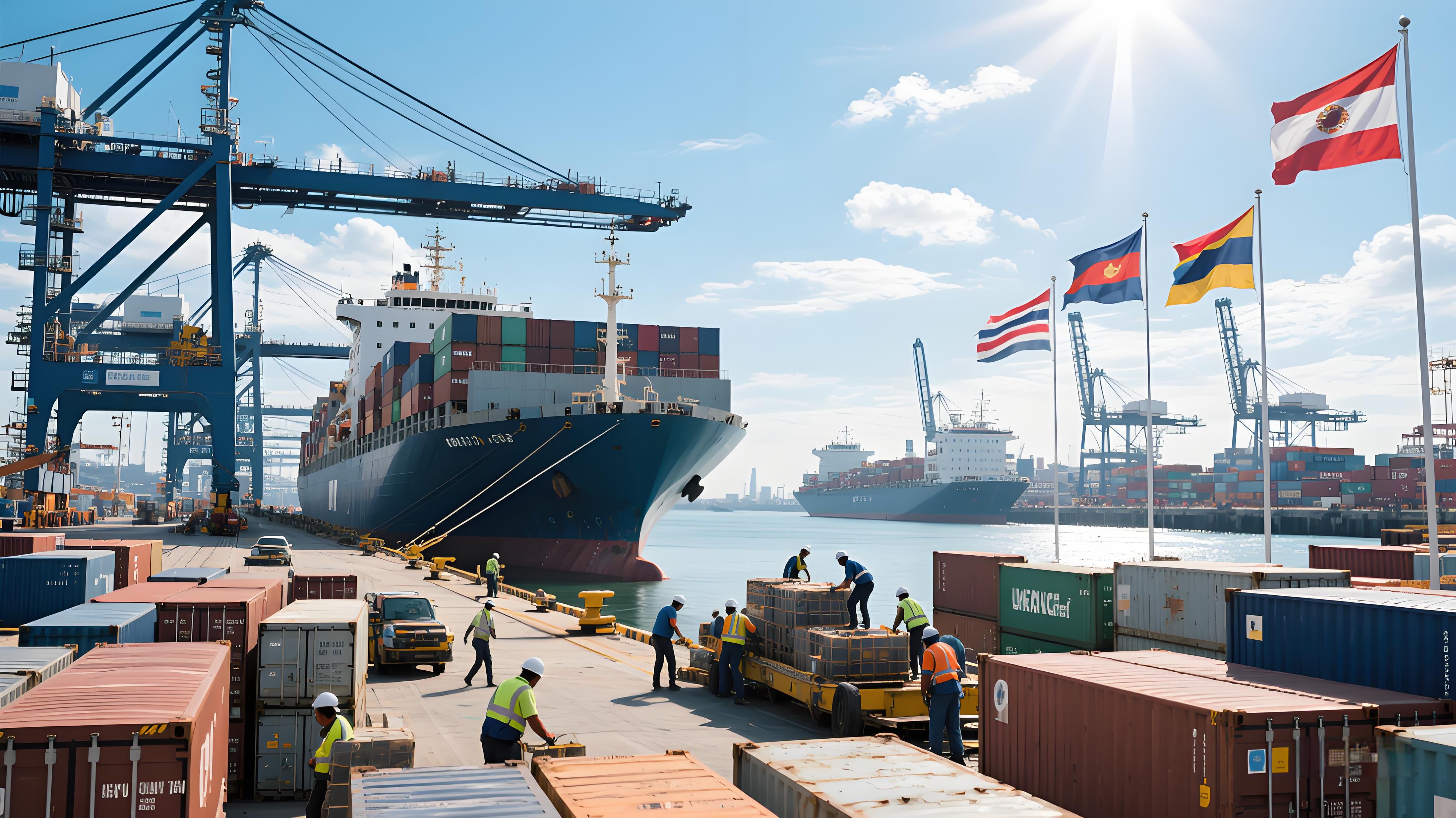
- Actual Meaning: It refers to the situation where container yards or warehouses at the destination port are near or at full capacity. Q3 2025 data shows that the export dwell time at ports like Conakry and Luanda in Africa has reached up to 12 days, while transshipment dwell time at some Middle Eastern ports exceeds 10 days. This causes vessel berthing delays, container pickup difficulties, and triggers a full-chain disruption. It is the most common and helpless objective reason for explaining delays.
“Port Gridlock”
- Related Jargon: Similar to “warehouse overload”, but it emphasizes port congestion caused by insufficient operational capacity or excessive vessel arrivals at the port itself. The classic case is the gridlock at the Ports of Long Beach/Los Angeles during the COVID-19 pandemic.
II. Documentation World: The “Legal ID” of Goods
If goods are the body, documentation is their soul. A complete and accurate set of documents is the guarantee for smooth customs clearance and payment collection.
Bill of Lading (B/L)
- “Document of Title”: It is the king of all shipping documents. Whoever holds a valid bill of lading (including electronic B/L) owns the title to the goods. Transferring the B/L is equivalent to transferring the ownership of the goods. In 2025, the global adoption rate of electronic B/L has reached 12.4%, and regions such as Singapore and the EU grant electronic B/L the same legal status as paper documents.
- Key Operation: “Telex Release”
- Scenario: The customer says: “Mailing the original B/L is too slow—please arrange a telex release, and we will pay the balance immediately.”
- Meaning & Risks: The seller instructs the shipping line to release the goods without the original B/L, allowing the consignee to take delivery with a copy of the B/L and valid identification. This accelerates the pickup process, but it means the seller surrenders the paper document of title and relies entirely on the buyer’s payment credibility. It is only suitable for highly trusted customers or transactions where full payment has been received. It is recommended to purchase “Electronic Document Malicious Attack Insurance”.
“Shipping Mark”
- Scenario: “Please confirm the outer carton shipping marks for finalization.”
- Meaning: Identification marks printed on packaging cartons, usually including customer initials, destination port, number of packages, order number, etc. In 2025, some ports require shipping marks to be linked to the 10-digit HS Code (in response to the customs “Two-Step Declaration” reform). Simple as it seems, it is extremely crucial. Incorrect shipping marks may lead to cargo misidentification at the port, wrong warehouse allocation, and huge troubles. Confirming shipping marks is an ironclad rule before shipment.
“Customs Clearance”
- Scenario: The customer sends an anxious email: “We’ve encountered issues with customs clearance—there seems to be a problem with the invoice amount.”
- Meaning & Collaboration: It is a mandatory legal procedure for goods entering or exiting a country’s border. The Commercial Invoice and Packing List provided by the seller are core documents for the buyer’s customs clearance. Any discrepancies in information (product name, HS Code, amount, quantity) will result in inspection, fines, delays, or even confiscation. Both buyers and sellers must collaborate closely to provide true and consistent customs clearance documents.

III. Timeline & Status Jargon
ETD/ETA (Estimated Time of Departure/Arrival)
- Meaning: The estimated time when the vessel departs the port of loading or arrives at the destination port. It is the lifeline throughout the entire logistics process, requiring continuous tracking and updates to the customer. In case of delays, proactive communication is far more professional than passive explanations.
“Cargo In Transit”
- Meaning: The cargo has left the port of loading and is in transit. In 2025, real-time location, temperature, and humidity data can be tracked via IoT devices—no longer a state of “unknown details”. It is advisable to confirm with your freight forwarder whether full-process visualization services are available, where key milestones (e.g., berthing, customs clearance) trigger automatic notifications, reducing communication costs.
Summary: Survival Rules for Logistics & Documentation (2025 Updated Edition)
- Choose Logistics Partners Adapted to New Scenarios: Prioritize freight forwarders with geopolitical route planning capabilities, congestion alert functions, and electronic B/L services. Especially for high-risk congested regions like the Middle East and Africa, verify their port cooperation resources.
- Update Documentation to Comply with Policy Requirements: Keep up with customs requirements such as the “Two-Step Declaration” and “10-digit HS Code”. For electronic B/L, prioritize countries that are signatories to the MLETR (UNCITRAL Model Law on Electronic Transferable Records) to ensure “document-to-document and document-to-credit consistency” while meeting digital regulatory needs.
- Information Transparency + Risk Prediction: Use real-time tracking tools to monitor cargo dynamics, proactively disclose route congestion risks to customers (e.g., referencing Q3 port congestion reports), and communicate delay contingency plans—it is the core of building trust.
- Communication Assurance Is the Core Backbone: We recommend using the IntBell Cloud Communication Platform—its global numbers enable one-click access to over 230 countries and regions, quickly establishing customer trust. Stable cross-border calls, multi-party collaboration, and encrypted chat functions efficiently address key scenarios such as roll-over communication, customs clearance verification, and balance payment confirmation, enabling “zero-delay, zero-barrier” supply chain communication and serving as a “mobile office” for foreign trade professionals.